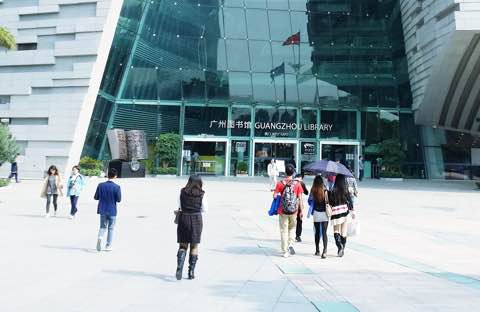
The China Pathway

The China Pathway

Based on the requirements provided and the institutional standards of the Afro-Eurasian Academic Chambers (AEAC), here is the official process guideline for students transitioning from application to graduation in China

Phase 1: The Chambers Pre-evaluation

Before formal submission, the AEAC conducts an internal audit of the applicant’s credentials to ensure they meet the rigorous standards of Chinese higher education.

  • Academic Document Prep: Collect high-quality scans of transcripts and diplomas
  • Competency Testing: For Bachelor’s Applicants: Register for the China Scholastic Competency Assessment (CSCA). This is currently a home-based test with a fee of $65 USD.
  • Language Proficiency: If the medium of instruction is Chinese, the student must sit for the HSK (Chinese Proficiency Test)
  • Health & Security: Complete a comprehensive medical check-up at a local hospital. Obtain an official Police Criminal Record Check to ensure eligibility for international residency.

Phase 2: Formal Application & Institutional Matchmaking

Once the "Chambers" audit is complete, the formal application to the partner university is initiated.

  • Financial Proof: Prepare a bank statement showing a minimum of $10,000 USD (for a single applicant) to prove financial self-sufficiency.
  • Application Submission: Submit the passport, professional photos, and academic records to the chosen faculty.
  • Fees: An application fee of $60 USD is required at this stage.

Phase 3: Admission & Visa Procurement (JW201/JW202)

Upon successful evaluation by the university and the AEAC board, the student moves into the legal migration phase overseen by the Secretary General.

  • Admission Letter: The university issues a formal Letter of Admission.
  • Visa Application Form: The university provides the JW201 or JW202 form (required for the X1 or X2 student visa).
  • Consulate Interview: Present the Admission Letter, JW form, and health checks to the Chinese Embassy/Consulate to obtain the student visa.

Phase 4: Enrollment & On-Campus Integration

  • Registration: Upon arrival in China, the student must register with the university’s international office and the local police bureau within 24 hours.
  • Residence Permit: The student visa is converted into a multi-entry Residence Permit for the duration of the study program.

Phase 5: Graduation & Global Certification

  • Academic Completion: Successful completion of all credits and the final thesis/capstone project.
  • Diploma Awarding: The student receives their degree, which is then validated by the Afro-Eurasian Academic Chambers for use in the global or African job market.
  • Alumni Network: Graduates join the Eastern Academia alumni network, maintaining ties for future professional opportunities in the Afro-Eurasian corridor.

Note to Board Members and Partners: This guideline ensures that every student under the AEAC banner follows a standardized, secure path that minimizes risk and maximizes the prestige of their eventual qualification.

Phase 6. Financial Excellence: Affordable & Transparent Costs

Choosing China through the Afro-Eurasian Academic Chambers allows students to access high-tier education at a fraction of the cost found in Western institutions.

  • Affordable Tuition Fees: Degree programs in China are highly subsidized, with annual tuition typically ranging from $2,500 to $5,000 USD for most English-taught programs.
  • No Hidden Costs: The AEAC ensures full transparency in fee structures, helping families plan their educational investment without the fear of sudden tuition spikes.
  • Value for Money: Students receive training in state-of-the-art facilities and laboratories that rival or exceed those in Europe and North America for a much lower investment.

Phase 7. Low Living Expenses: High Quality of Life

China offers one of the best "cost-to-quality" ratios for international students.

  • Cost of Living: Depending on the city, a student can live comfortably on $300 to $600 USD per month, covering accommodation, food, and utilities.
  • Subsidized Housing: Most partner universities provide modern, secure, and affordable on-campus dormitories specifically for international students.
  • Dining and Transport: Student canteens offer diverse, healthy meals at very low prices, and the public transport system including high-speed rail is among the most affordable in the world.

8. Scholarship & Funding Opportunities

The Afro-Eurasian Academic Chambers is committed to removing financial barriers through a robust network of scholarship opportunities.

  • CSC (Chinese Government Scholarships): Fully or partially funded scholarships that cover tuition, accommodation, and provide a monthly living stipend.
  • The AEAC Reward: A proprietary program by the Chambers and its partners designed to reward top-performing students in the AEAC network with specialized grants and admissions perks.
  • Provincial & University Scholarships: Many Chinese provinces and individual universities offer "Belt and Road" scholarships specifically for talented African students.
  • Corporate Sponsorships: Through our "Chambers" partnerships decision.
  • Funding for Excellence: Selective European scholarships are available for those who meet the high scholastic standards of the AEAC board.

The AEAC Promise: "The Afro-Eurasian Academic Chambers is more than a gateway; it is a bridge. We promise to support your transition through every phase: cultural, linguistic, and professional, so that you emerge not just as a graduate, but as a transcontinental leader ready to transform the African landscape."

Contact Media Relations

Media Relations

Phone number 123 0039 68886

Photo Services

Phone number 123 0039 68886

Information Center

Phone number 123 0039 68886
Select the fields to be shown. Others will be hidden. Drag and drop to rearrange the order.
  • Image
  • SKU
  • Rating
  • Price
  • Stock
  • Availability
  • Add to cart
  • Description
  • Content
  • Weight
  • Dimensions
  • Additional information
Click outside to hide the comparison bar
Compare